Activity ReportsLectures and EventsDesign Without Boundaries2025.2.4
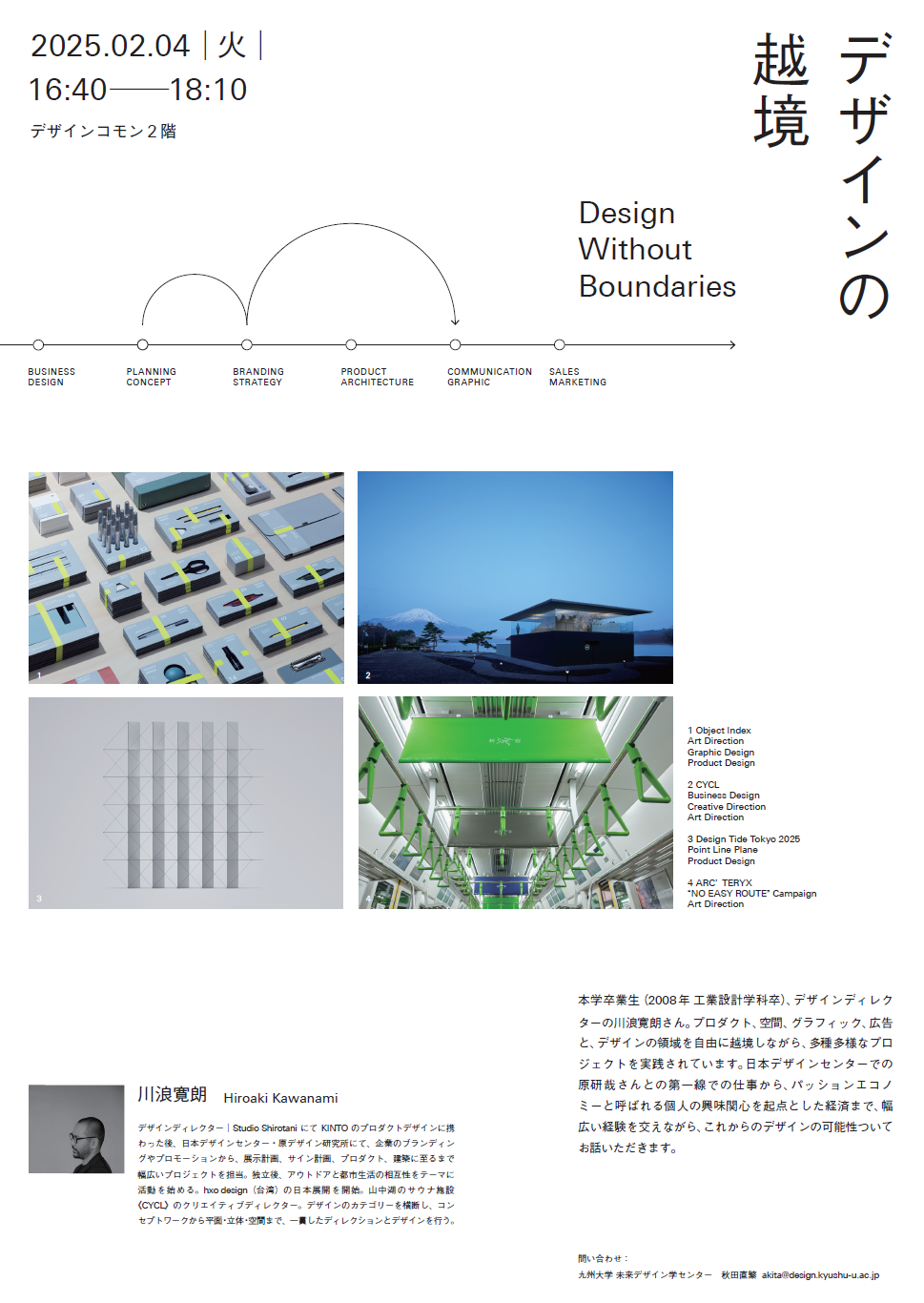
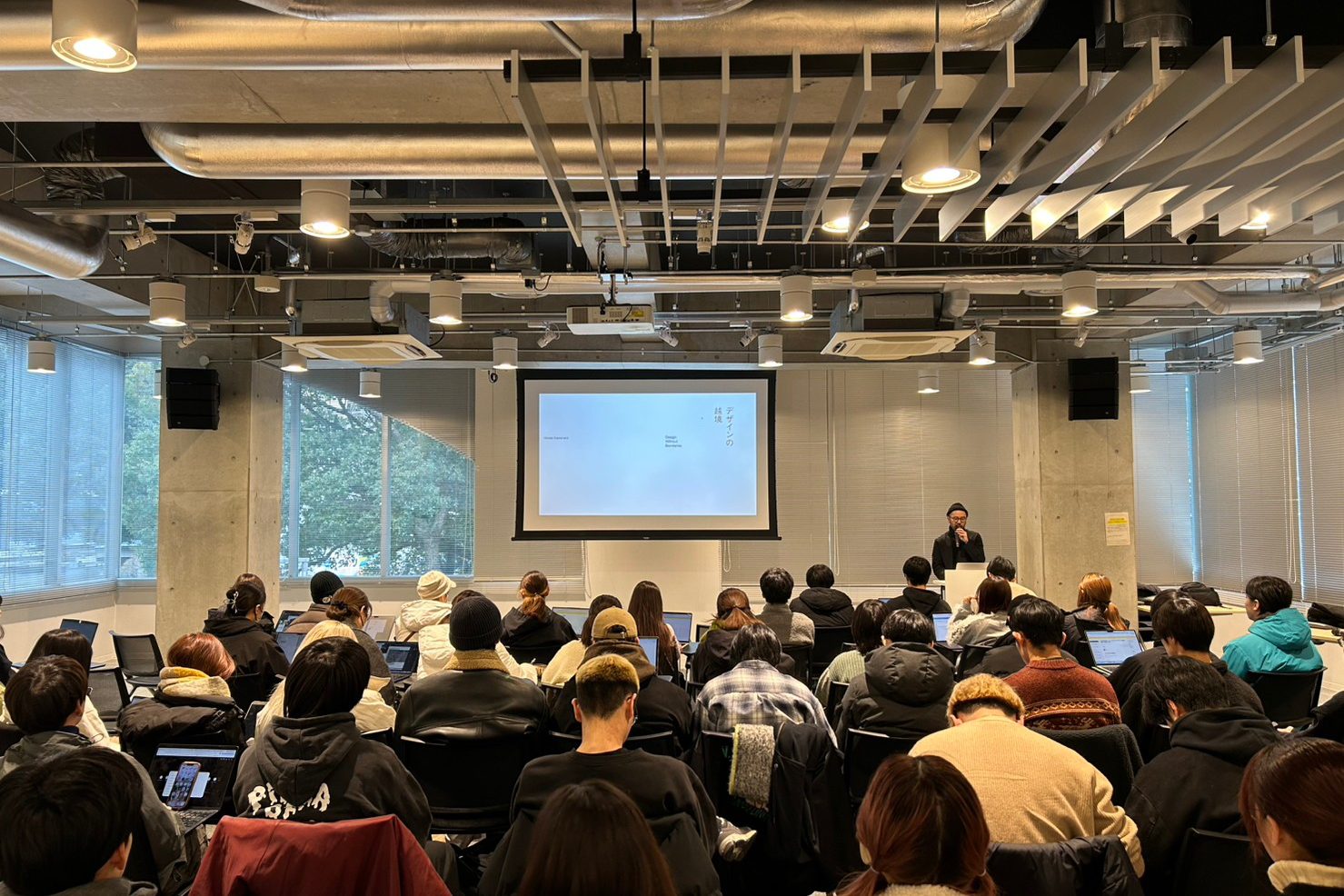
On February 4, 2025, the Center for Designed Futures hosted a lecture titled “Design Without Boundaries” at the Design Commons on the Ohashi Campus of Kyushu University, welcoming design director Hiroaki Kawanami as the featured speaker. Kawanami graduated from the Department of Industrial Design at the Kyushu Institute of Design in 2008. He then joined Studio Shirotani, where he contributed to the product design of KINTO, before moving to Nippon Design Center’s Hara Design Institute, where he worked on a wide range of projects including corporate branding, promotion, exhibition planning, signage, product design, and architecture. In 2020, he went independent and established Hiroaki Kawanami Design, where he continues to pursue diverse creative activities, freely crossing boundaries across the domains of product, space, graphic, and advertising design.
The lecture covered a wide range of topics, from projects Kawanami carried out at Nippon Design Center alongside Kenya Hara, to discussions of the passion economy, an economic model driven by individual interests and passions, offering rich insights into the future possibilities of design. Approximately 50 people attended on the day.
The following is a report highlighting several key topics from the lecture.
— Experience and Influence at Studio Shirotani
Kawanami spoke of encountering and being deeply influenced by designer Kosei Shirotani in Obama-cho, Nagasaki Prefecture. Shirotani had studied under the masters of Progettazione in Italy, Achille Castiglioni and Enzo Mari, and upon returning to Japan devoted himself to exploring what design for artisans could mean, rather than design in service of corporate profit in a consumerist society. Kawanami described being inspired by Shirotani’s approach. Rather than striving to always produce something entirely new in a world already overflowing with objects, recognizing and nurturing exceptional craftsmanship potential that already exists is the path that leads to better products and helps preserve artisans and their skills. Using examples such as the BAICA project with bamboo craft artisans in Beppu, Oita Prefecture, Kawanami spoke concretely about socially and ethically grounded ways of creating. He also emphasized the importance of pausing mid-project to ask, “Should we really be doing this?” and continually questioning one’s own practice as work progresses.
Progettazione: An Italian design philosophy that prioritizes socially engaged creation and civic education over design in service of corporate profit in a consumerist society.
— Post-Independence Work and the Passion Economy
Following his discussion of his time at Nippon Design Center, Kawanami spoke about his activities since going independent. He began by exploring the relationship between outdoor life and urban living, launching the Japan operations of hxo design (Taiwan). He also serves as creative director of CYCL, a sauna facility at Lake Yamanaka. For the advertising campaign for the Arc’teryx Shinjuku brand store, he produced a film expressing the brand’s philosophy of craftsmanship under the message “NO EASY ROUTE.” The campaign used Gore-Tex fabric left over from the manufacturing process, on which hand-printed silk-screen designs were applied, and were presented as hanging advertisements on the JR Yamanote Line and elsewhere. After the campaign ended, Kawanami introduced a project to upcycle these materials into new products.
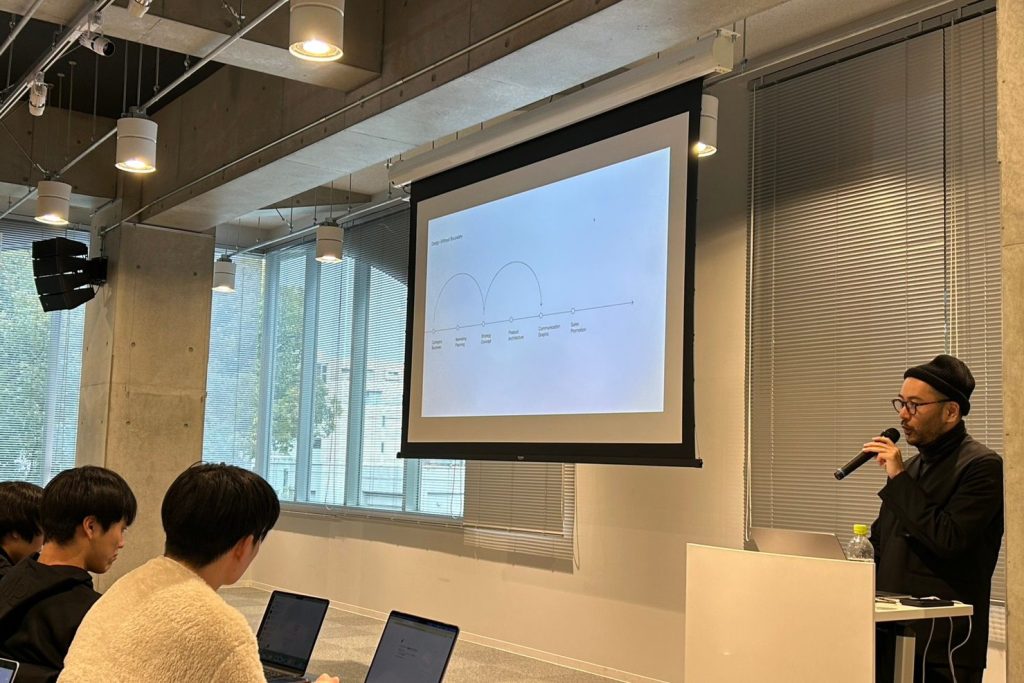
He also spoke on the era of digital tools, in which individuals can now share and sell their work online. He introduced the concept of the passion economy and reflected on his own approach to making, speaking about “what design can do.” Through this lecture, participants were given the opportunity to reflect on the future of making and their own careers. Guided by Kawanami’s experience, an enriching session on thinking about how to work as a designer across domains, and how to cultivate a broad range of sensibilities and perspectives was provided.